Tag: budget

  • Over 400 rural hospitals are at a risk of closure

    source: Chartis 2025 “Rural Health state of the state”
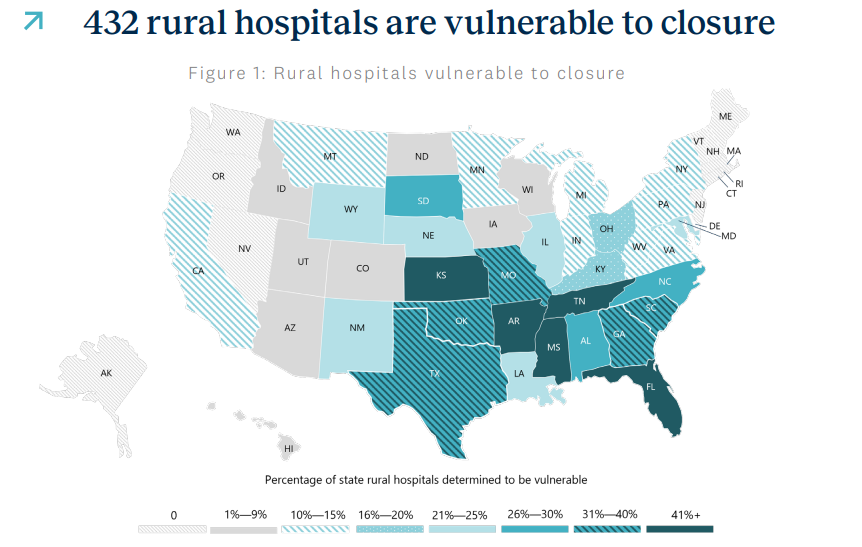
    Why is that?

    • Smaller, aging populations mean lower patient volumes.
    • Heavy reliance on Medicare and Medicaid leads to thinner margins.
    • Workforce shortages drive up costs and limit service lines.
    • Closures of OB, oncology, and other departments reduce both access and revenue.

    The result: communities lose local care options, and hospitals struggle to remain anchors of health.

    At HealthOcta, we’re building VideoConsults to help rural hospitals retain patients, expand specialty coverage, and strengthen their long-term sustainability. We believe technology should reduce the pressure, not add to it.

    How VideoConsults helps here?

    Problem: Low patient volumes + service line closures make it hard to justify onsite specialists.
    VideoConsults helps by: Allowing rural hospitals to access specialists on-demand (cardiology, ID, endocrinology, etc.) without the fixed cost of hiring full-time staff. Patients can be kept local rather than transferred out.

    Problem: High transfer rates = lost revenue + fragmented care.
    VideoConsults helps by: Giving ERs and inpatient units a direct specialist connection. Many cases that would have been transferred can now be managed locally, keeping both revenue and trust in the community hospital.

    Problem: Workforce shortages, recruitment difficulty, and burnout.
    VideoConsults helps by: Extending the reach of the limited staff they do have. A single hospitalist can lean on specialty support, reducing decision fatigue and improving confidence in care.

    Problem: Financial pressure from payer mix and sustainability issues.
    VideoConsults helps by: Creating a flexible, scalable specialty access model that grows (or shrinks) with patient volume, no sunk cost in trying to sustain a low-volume service line.

    Problem: Community trust erodes when services vanish.
    VideoConsults helps by: Preserving access to advanced care close to home, reinforcing the hospital’s role as the anchor of the community.

    What makes VideoConsults unique in how we approach the solution…

    Unlike outsourced telehealth services, VideoConsults is not a replacement for your team, it’s an infrastructure layer that hospitals license and control. We’re a specialty access fabric that brings to you integrated devices, structured intake and telehealth tools. Add to it your own specialists or specialists you contract with. We even have a directory of specialists we could refer to you.

    • Clinical control stays local: Hospital leadership decides which specialists to connect, whether it’s their own employed physicians or contracted partners.
    • Flexible staffing: Rural hospitals can choose to partner with regional hubs, independent specialists, or IDNs, and swap or add partners without changing the platform.
    • Technology + compliance backbone: We bring structured intake, EMR-lite documentation, device integration, and even offer back-office support, but the hospital leads care delivery.

    Sustainable model: This puts community hospitals in the driver’s seat, they decide where to invest scarce resources while still ensuring specialty coverage.

    Too often, “tech solutions” create new problems – more workflows, more costs. For rural hospitals already stretched thin, that’s not sustainable. We built VideoConsults with a different principle: technology should lighten the load. By simplifying specialty access, reducing transfers, and fitting seamlessly into existing operations, our platform helps hospitals strengthen care without adding complexity or taking control away from leadership. In addition, VideoConsults is designed to be flexible for every budget. Tap to see more about the VideoConsults platform or talk to us about it.

  • The Psychology of Trust: Why Customers Trust Reviews More Than Ads

    In a world overloaded with marketing, ads are everywhere—interrupting YouTube videos, flooding Instagram feeds, and popping up on every click. Yet, ask your average customer what influences their buying decision, and they’ll tell you: “I read the reviews.”

    This isn’t just preference—it’s psychology.


    Why Reviews Work (and Ads Don’t)

    1. Third-Party Validation Triggers Trust

    When a customer sees a glowing review from another buyer, it activates the same brain patterns as getting a recommendation from a friend. This is called social proof—a psychological shortcut that tells the brain:

    “People like me trust this business. So I probably can too.”

    Ads, on the other hand, come from the business itself. Consumers know you’re trying to sell. So their brain applies friction:

    “What’s the catch?”

    2. Authenticity > Polish

    The rougher edges of user-generated content—typos, casual tone, even background noise in video reviews—signal genuineness. Ironically, it’s this lack of polish that builds more trust than a professionally produced ad.

    Real people sharing real experiences > Stock photos and brand slogans.

    3. Reviews Are Storytelling at Scale

    Every review is a micro-story:

    • What problem they had
    • What solution your business offered
    • How they felt afterward

    Ads tell, but reviews show. They paint a picture of transformation—without you having to say a word.


    Why Trust in Ads is Falling (and Reviews Are Rising)

    • Ad fatigue is real. Consumers see between 4,000–10,000 ads a day. The brain filters most of them out.
    • Review platforms are growing. 93% of people read reviews before buying. 84% trust online reviews as much as a personal recommendation.
    • Video reviews drive memory & emotion. Humans are wired for faces and voices. A 30-second review from a real customer triggers far more engagement and retention than a static banner.

    How trustEngine Taps into This Psychology

    At trustEngine, we’ve built our platform around this truth:

    Trust doesn’t come from ads. It comes from people.

    Here’s how we help you use reviews as your most powerful marketing asset:

    • Capture reviews in the moment — on a tablet in-store, or through QR cards in the field
    • Video & audio review tools — make your happy customers your best salespeople
    • Automated review flows — so no good experience goes unshared
    • Smart routing of feedback — so unhappy customers speak to you before they speak to the internet

    We don’t just help you get reviews.
    We help you use them to build unshakable trust with your audience.


    Turn Reviews into Revenue

    You don’t need a bigger ad budget.
    You need more trust.

    And trust isn’t bought.
    It’s earned—and amplified—with trustEngine.


  • Why You Should Start Your College Personal Statement This Summer

    And How Pathways Can Help You Write Your Best Story Yet

    The personal statement — it’s just 650 words, but it’s one of the most powerful parts of your college application.

    This isn’t just an essay. It’s your chance to tell admissions officers who you are beyond grades, scores, and activities. It’s the narrative that can bring your whole application to life.

    But here’s the truth:
    A great personal statement takes time — and summer is the smartest time to start.


    ⏰ Why Starting in the Summer Is a Strategic Move

    By beginning your personal statement early in the summer before senior year, you:

    ✅ Avoid the Last-Minute Rush

    During the school year, you’ll be juggling classes, clubs, testing, and other deadlines. Writing your personal statement early reduces stress and gives you time to write thoughtfully.

    🧠 Get Space for Reflection

    Good writing needs room to breathe. Starting in June or July gives you time to:

    • Brainstorm strong ideas
    • Write multiple drafts
    • Step away from your writing
    • Return with new perspective and clarity

    ✍️ Improve Quality Over Time

    The best essays evolve through feedback and revision. Advisors and mentors can help refine your structure, tone, and storytelling — but only if there’s time to do it properly.


    🔍 What Makes a Strong Personal Statement?

    A compelling college essay isn’t about perfection — it’s about authenticity, structure, and voice. Here’s what colleges are really looking for:

    • Authenticity: Does it sound like you?
    • Reflection: What did you learn or how did you grow?
    • Focus: Is there a clear message or theme?
    • Storytelling: Can the reader visualize the experience?
    • Clarity: Is it well-written and easy to follow?

    Many students struggle with knowing where to begin or how to bring depth into their writing. That’s where guidance makes a difference.


    🧑‍🏫 How Pathways Helps You Write a Great Personal Statement

    Pathways connects students with peer mentors and professional advisors who specialize in college applications — including the personal statement.

    Whether you need:

    • A brainstorming session to unlock your topic
    • Expert feedback on a draft
    • Help understanding what different schools expect
      — you’ll find the right support on Pathways.

    💬 Ask a Question or Book a 1-on-1 Session

    On Pathways, you can:

    • Post questions to get feedback from the community
    • Book live advising sessions with a peer or professional advisor
    • Get specific help for programs like BS/MD, Ivy League, UCs, or specialized majors

    All without paying platform fees when you choose your own advisor.


    🎯 Who Should You Work With?

    At Pathways, you’ll find two kinds of advisors:

    • Peer Advisors – current college students who’ve recently gone through the process and can offer relevant, relatable insights.
    • Professional Advisors – experienced college consultants, former admissions officers, and educators with deep application expertise.

    You choose who fits your needs and budget.


    🚀 Ready to Get Started?

    The college admissions process doesn’t have to be overwhelming. Starting your personal statement now is the best way to stay ahead and ensure your voice is heard.

    📅 Book a session with an advisor today and take the first step toward an essay that makes a lasting impression.

    👉 Get help with your personal statement now


    🔁 Bonus: Questions to Get You Started

    Here are 5 prompts to get your brainstorming started:

    1. What’s a challenge you’ve overcome, and how did it shape who you are?
    2. What’s a moment you’re proud of — and what does it say about your values?
    3. Who or what has influenced the way you see the world?
    4. When did you change your mind about something important?
    5. What’s something you deeply care about, and why?

    Take your time. And when you’re ready, Pathways is here to help you shape it into your strongest story.

  • What We Learned from the 2025 College Admissions Cycle: Trends Every Family Should Know

    As the dust settles on the 2025 admissions season, a few clear patterns have emerged—some familiar, others new. Whether you’re a parent of a rising 9th grader or a senior preparing to submit applications this fall, the lessons from this cycle are instructive. Drawing from state data, admissions policy shifts, and conversations with both successful applicants and admissions officers, here’s what stood out—and what it means for your planning.

    1. High School GPA Remains the Strongest Predictor of College Success

    The University of California’s internal research continues to affirm what many admissions professionals already know: GPA—especially in rigorous courses—is more predictive of college persistence and performance than standardized test scores. This held true again in 2025. While some elite colleges have returned to requiring SAT/ACT scores, the GPA remains the most stable anchor in a holistic file.

    What it means: Focus on academic consistency across all four years, with a particular emphasis on honors, AP, IB, or dual enrollment courses where available.


    2. Standardized Testing Is Making a Measured Comeback

    In a significant policy reversal, institutions like Dartmouth, Yale, MIT, and Brown reinstated testing requirements in 2025. Citing internal analyses showing test scores added predictive value for underrepresented groups, these schools emphasized the importance of strong test performance—especially in math-heavy majors.

    That said, many other schools remain test-optional or test-blind (like the UC system), creating a patchwork landscape.

    What it means: For students applying to top-tier or STEM-focused programs, preparing for and submitting strong test scores can be a differentiator. For others, test-optional still means optional—but GPA, course rigor, and other components must be even stronger.


    3. Early Action and Early Decision Still Deliver an Edge

    The data continues to show that early applicants have an advantage, especially in Early Decision (ED) pools. Acceptance rates are often 2–3x higher for ED than Regular Decision—not because of lower standards, but due to a more self-selected and prepared applicant pool.

    At schools like the University of Pennsylvania and Duke, more than half the incoming class is now filled through ED.

    What it means: If your student is clear on their top-choice school and their profile is competitive, ED is a strategic move. But beware: ED is binding, so only apply if financials and fit align.


    4. Application Strategy Matters More Than Ever

    One major shift this year was a smarter, more targeted approach by successful applicants. They didn’t just apply to a long list of “reach” schools. Instead, they focused on major fit, demonstrated interest, and schools aligned with their academic and personal strengths.

    Colleges are also showing a preference for students who align well with institutional priorities, including first-generation status, geographic diversity, or specific programs with lower enrollment.

    What it means: Don’t just chase name brands. Build a balanced list of schools where your student’s profile and interests are a fit. Tools like Pathways allow students to speak with peer mentors who’ve been admitted to those exact programs.


    5. The Role of Extracurriculars and Essays Keeps Growing

    With test scores de-emphasized at many schools, essays and extracurriculars carried more weight than ever in 2025. Essays that showed authentic voice, personal growth, and connection to the intended field of study stood out. Meanwhile, activities that demonstrated depth, leadership, and impact mattered more than sheer quantity.

    What it means: Curate a narrative. Whether it’s robotics, creative writing, or a personal project, depth beats breadth. And don’t underestimate the value of a compelling essay—especially with AI-assisted tools now widely in use by students (and flagged by colleges).


    6. Families Are Rethinking the Role of Advising

    Perhaps most notably, we saw a growing gap between families who had strategic guidance and those who didn’t. But the $5,000+ price tags of traditional college counseling services remain a major barrier for most.

    That’s where Pathways comes in. Our platform connects students with both peer advisors (recent admits who’ve just been through the process) and seasoned professionals—no lock-ins, no contracts, just transparent pay-per-consultation access. Ask a question, review advisor profiles, and book on your terms.

    What it means: Advising is no longer one-size-fits-all. Whether your student needs help building their activity list or drafting a personal statement, you can now find the right voice for the right moment—at a price that fits your budget.


    Final Thought:

    The 2025 admissions cycle underscored a fundamental truth: strategy, self-awareness, and storytelling matter more than ever. And with the evolving policies around testing and holistic review, families need nuanced, current guidance—something that Pathways was built to deliver.

    👉 Want tailored advice from someone who’s just been there?
    Book a session with a Pathways advisor today.


  • Why Your Next Services Transaction Needs TrustLock: Building Unshakeable Confidence in the Gig Economy

    In today’s fast-paced gig economy, the promise is alluring: unparalleled flexibility for providers, and instant access to specialized talent for clients. Yet, beneath this dynamic surface lies a persistent challenge – trust.

    How do you, as a client, confidently invest in a project with a service provider you’ve never met in person? And for providers, how do you pour your expertise into a project without the gnawing worry of late payments or, worse, no payment at all?

    This is where TrustLock on ServiceBridge steps in, transforming uncertainty into unshakeable confidence.

    The Gig Economy’s Trust Gap: A Familiar Pain Point

    Think about it:

    • For clients: The anxiety of upfront payments for work yet to be delivered. The risk of projects going off-track, or deliverables not matching expectations. The hesitation to give new, promising providers a chance because their reputation isn’t fully established.
    • For service providers: The endless chase for invoices. The frustration of completing work perfectly, only to face payment delays or disputes. The struggle to secure initial projects when you’re new to a platform and haven’t built a robust rating.

    These aren’t just minor inconveniences; they’re fundamental friction points that can slow down growth, limit opportunities, and erode the very benefits the gig economy promises.

    Introducing TrustLock: Your Personal Security Vault

    At its core, TrustLock is a secure, neutral vault for your project funds. When you engage in a transaction on ServiceBridge, the payment goes into TrustLock, where it remains safely held until the terms of your agreement are met.

    The name TRUSTLOCK itself is a promise: Trusted Release Under Simple Terms, Limited Only to Contract Keys.

    Why TrustLock is a Game-Changer for Everyone:

    1. Secure Your Investment (for Clients)
    No more guessing games with your budget. When you enable TrustLock, your funds are secured. They are only released when you confirm that the project milestones are met or the final deliverables are approved. This guaranteed project safety means you can initiate work with total peace of mind.

    2. Ensure Fair Payment (for Service Providers)
    Your hard work deserves guaranteed compensation. With funds held in TrustLock, you know the client is committed. Once you deliver on the agreed-upon terms, your payment is secured and ready for release. No more chasing invoices, no more payment anxieties.

    3. Build Trust, Especially with New Connections
    TrustLock is an optional feature on ServiceBridge. This flexibility is key. For smaller, quick tasks, you can continue to transact freely. But for medium to high-value transactions, or when you’re working with a new service provider who’s just starting to build their reputation, TrustLock becomes invaluable. It allows new talent to get established, and clients to explore more options without the usual hesitation. It’s a win-win for growth on the platform.

    4. Crystal-Clear Agreements, From Start to Finish
    With TrustLock, both clients and providers define the rules of their transaction upfront. This includes:

    • Detailed Milestones: Breaking down the project into clear stages with associated payments.
    • Release Conditions: Explicitly stating what needs to be delivered or achieved for funds to be released at each step.
    • Dispute Resolution: Every TrustLock agreement has a clear plan for what happens if disagreements arise. You can choose from a library of protocols or define your own.

    This upfront clarity means fewer misunderstandings and a smoother path to project completion.

    5. Your Transaction, Your Control, No Intermediary
    Crucially, ServiceBridge is never a party to your transaction, nor does it act as an intermediary in disputes. TrustLock is simply a powerful tool that you and the other party control. If a dispute occurs, you have two clear paths:

    • Amicable Resolution: Talk it out, agree, and jointly instruct TrustLock to release the funds.
    • Defined Protocol: If agreement isn’t possible, the pre-defined dispute resolution protocol (often binding arbitration) kicks in, providing a structured, fair pathway to a final decision. Once resolved, both parties instruct TrustLock on the disbursement.

    Experience the Future of Secure Freelancing

    TrustLock isn’t just a feature; it’s a commitment to a safer, more transparent, and more reliable gig economy. It’s about removing the anxiety from online transactions, allowing clients to confidently pursue their visions and providers to focus on delivering their best work.

    Choose TrustLock for your next ServiceBridge transaction and build unshakeable confidence in every collaboration.

  • Your Renovation Budget Isn’t the Problem—It’s the Bidding Process

    “How did it go 40% over budget?”
    That’s the question Priya kept asking herself.

    She had done the prep: pinned bathroom design ideas, set a clear budget of $18,000, and even took time off work to oversee the renovation. But as weeks passed, the estimates kept creeping higher. Materials were “suddenly” out of stock. Labor costs increased. And somehow, the contractor needed an extra $5,000 to finish “unexpected work.”

    By the time the bathroom was complete, the project had ballooned to $25,300—and there was no going back.

    What went wrong?


    The Hidden Flaw in How We Hire for Home Projects

    Priya’s experience isn’t rare. In fact, a recent industry study showed that over 52% of home renovation projects exceed their initial budgets, and most of those overruns stem from a common root cause:

    👉 The bidding process is broken.

    When homeowners need repairs or improvements, they usually:

    • Ask around for referrals
    • Search online
    • Make a few calls (if they’re lucky enough to get callbacks)
    • Choose based on who’s available first or gives a reasonable-sounding quote

    But without a transparent, competitive bidding environment, you’re operating on assumptions—not data. And that leads to:

    • Overpaying for labor or materials
    • Unqualified providers slipping through
    • Surprise add-ons that inflate the scope

    Fixing the Bidding Process with The Service Bridge and OneCall

    We created The Service Bridge to address exactly this problem. Instead of a one-off search, the platform turns your job into a transparent request for proposal (RFP)—one that real providers respond to, competitively.

    With OneCall, here’s what you get:

    1. Describe Your Project Once
      Upload details, images, videos, and any must-haves.
    2. Get Matched with Vetted Providers
      Our system notifies relevant pros in your area who meet your criteria.
    3. Receive Up to 5 Legit Quotes
      You get quotes side by side, with full transparency: pricing breakdowns, provider ratings, past project reviews, and credentials.
    4. Make an Informed Choice
      You can ask clarifying questions, annotate your quotes, and even hold payment in escrow until the work is delivered.

    This approach makes it hard for providers to inflate pricing or hide fees—and easy for you to identify the best value without compromising quality.


    Your Budget Isn’t the Issue—It’s the System

    A broken hiring process can make any budget feel too small.

    But with a transparent, competitive quoting system like OneCall, you’re no longer negotiating in the dark. You’re making informed decisions with multiple credible options.

    That’s how Priya should’ve done it.
    Now, thanks to The Service Bridge, she will—for the kitchen remodel next spring.

  • The #1 Complaint Among Homeowners After a Renovation Project

    You’ve just finished your dream renovation—new kitchen, upgraded bathroom, fresh paint, maybe even some custom cabinetry. You’ve waited for weeks, possibly months, watched the progress, and paid for it. Finally, you’re ready to enjoy your newly transformed space. But as you stand back to admire the work, something starts to bother you: Why isn’t everything as perfect as I expected?

    It’s a scenario that plays out far too often for homeowners after a renovation project: The work isn’t quite up to the standard you anticipated, and you’re left feeling frustrated, disappointed, and possibly even out of pocket. The #1 complaint among homeowners post-renovation is poor-quality work, unfulfilled expectations, or a lack of attention to detail.


    The Real Cost of Unfinished or Subpar Work

    The excitement of completing a home renovation often comes with a sense of relief, but that relief can quickly turn to regret when you realize the quality of work doesn’t meet your expectations. Whether it’s a floor that wasn’t properly leveled, paint that’s chipped or uneven, or fixtures that don’t align properly, it can feel like your hard-earned money didn’t buy the perfection you were promised.

    For many homeowners, the problem isn’t always obvious right away—it often surfaces when you begin using the space more regularly. The cracks in the paint or the tiles that start to shift only become evident after you’ve lived with them for a while.

    Not only is this frustrating, but it can also be expensive. Fixing the issues can often mean going through the process of finding contractors again, and that’s time-consuming, stressful, and costly—especially if you’re dealing with a contractor who isn’t responsive or doesn’t stand by their work.


    Why Does This Happen?

    There are several reasons why homeowners are often disappointed with the outcome of a renovation:

    1. Lack of Proper Vetting for Contractors: Homeowners may hire a contractor based on a recommendation or online search, but without a thorough review of their past work, credentials, and reputation, they can end up with a contractor who lacks attention to detail or doesn’t fulfill their promises.
    2. Unclear Expectations: Homeowners and contractors sometimes fail to communicate clearly about the scope of the project, leading to misunderstandings about what’s included, how long it will take, and what the final result should look like.
    3. The Cheapest Quote: Homeowners often go with the lowest bidder to save money, but cut-rate prices can lead to cut-rate work. Contractors who offer lower prices might not be as committed to quality or may rush through the job to maintain their margin.
    4. Disorganization and Delays: Renovations often take longer than expected, especially when the project is large or complicated. Unexpected delays and disorganization on the contractor’s side can lead to rushed work or incomplete jobs.

    How The Service Bridge and OneCall Solve These Problems

    The Service Bridge and OneCall were built to address the very issues homeowners face after a renovation. Through technology and a smarter approach, these platforms help homeowners like you ensure that they’re working with trusted professionals who will get the job done right the first time.

    Here’s how The Service Bridge and OneCall solve the common complaints associated with post-renovation disappointment:

    1. Vetted and Rated Contractors: On The Service Bridge, every contractor is carefully vetted for professionalism and quality. The platform ensures that you’re working with professionals who have a proven track record of successful, high-quality work. The ratings and reviews from previous clients provide a clear picture of the contractor’s abilities, helping you avoid the frustration of subpar work.
    2. Clear Communication and Transparency: Before any work begins, The Service Bridge ensures that both parties—the homeowner and the contractor—are on the same page about the scope of work, timelines, and expectations. With clear and transparent communication from the start, there’s less room for misunderstandings and unmet expectations.
    3. Multiple Quotes and Comparison: With OneCall, you’re able to get multiple quotes for your project, giving you the flexibility to choose the best contractor for the job, not just the cheapest one. Having a variety of bids also ensures that you’re getting a fair price for quality work. It prevents you from falling into the trap of hiring based on price alone.
    4. Escrow Payment System: One of the most important benefits of OneCall is the escrow payment system, which ensures that funds are only released to the contractor when you’re satisfied with the job. This acts as a safeguard to ensure that you’re not left paying for incomplete or unsatisfactory work. You hold the power until the work meets your standards.
    5. Accountability Through Reviews: The Service Bridge has a rating and review system that allows you to check out contractors based on their past work. If they’ve done quality work for others, it’s likely they’ll do the same for you. This reputation system holds contractors accountable, ensuring that they deliver the high standards they’ve promised.

    The Hidden Costs of Incomplete or Shoddy Work

    The emotional and financial costs of poor-quality work can be significant. Beyond the initial cost of the renovation, you may have to:

    • Hire additional professionals to fix mistakes or unfinished jobs.
    • Deal with the frustration and stress of chasing down contractors who don’t respond.
    • Experience the disappointment of not getting the home you envisioned.

    When things go wrong with your renovation, it doesn’t just affect your wallet—it can affect your peace of mind and your enjoyment of your space. No one wants to live with the stress of wondering whether their home will ever be truly finished or up to standard.


    The Service Bridge & OneCall: Protecting Your Investment

    By using The Service Bridge and OneCall, you’re not just hiring contractors—you’re investing in peace of mind. You’re ensuring that the contractors you work with are trustworthy, reliable, and committed to high-quality work. These platforms allow you to:

    • Compare multiple quotes and choose the best provider for your needs.
    • Have a transparent line of communication with your contractor to make sure you’re always on the same page.
    • Protect your payment and ensure satisfaction before money changes hands.

    Conclusion: Don’t Settle for Less Than Your Dream Renovation

    The #1 complaint after a renovation project is subpar work, poor communication, and the emotional toll it takes on homeowners. Don’t let that be your story. With The Service Bridge and OneCall, you can ensure that your renovation projects go smoothly, stay within budget, and meet or exceed your expectations.

    By using these platforms, you’ll not only get the best service providers but also have the peace of mind that comes with knowing your project is in good hands. So, next time you embark on a home renovation, choose a smarter approach with The Service Bridge and OneCall—and enjoy the home of your dreams, without the post-renovation headaches.

  • How to Get 5 Legit Quotes for Home Repairs Without Chasing People Down

    It’s the weekend, and Sarah, a homeowner in Los Angeles, discovers that the plumbing in her kitchen is leaking. The water is starting to pool under the sink, and she knows that if she doesn’t fix it soon, it could cause some serious damage. She needs a plumber, but she doesn’t want to deal with the usual hassle of finding a reliable professional.

    Sarah pulls out her phone and starts calling a few plumbers she finds online. After several voicemails, long hold times, and no call-backs, she’s frustrated. How is she supposed to get reliable quotes without running around chasing contractors? She’s losing valuable time that could be spent actually getting the repair done.


    The Problem: Finding Legit Quotes Feels Like a Full-Time Job

    Sarah’s experience is all too familiar for homeowners across the U.S., whether in bustling cities like New York or quieter areas like Asheville. Finding a reliable contractor who can provide a fair, honest quote without playing phone tag is nearly impossible. Between searching online, checking reviews, making calls, and waiting for responses, the whole process is time-consuming and often leads to unqualified contractors.

    But here’s the thing: you don’t need to spend your time chasing down quotes. There’s a better way to get multiple, legit quotes quickly and easily—without any of the usual stress or confusion.


    The Traditional Way vs. The Better Way

    Traditional Method:

    • You spend hours searching for contractors online.
    • Call each one and leave voicemails.
    • Wait days for a response (or never hear back at all).
    • Get a quote that might be overpriced or not detailed enough.
    • If you’re lucky, the contractor shows up when they say they will.

    The Better Way (Using The Service Bridge and OneCall):
    With The Service Bridge and OneCall, you can skip the frustrating chase. These platforms automate the process of finding trustworthy contractors, gathering competitive quotes, and connecting with qualified professionals—all with just a few clicks.


    Step 1: Request Quotes Without Picking Up the Phone

    Instead of wasting time calling multiple contractors, The Service Bridge and OneCall let you request quotes from multiple providers directly through the platform. Here’s how it works:

    1. Describe Your Job: Simply enter the details of the home repair you need. Whether it’s plumbing, electrical work, HVAC, or something else, the platform helps you outline what’s needed clearly and quickly.
    2. Get Matched with Qualified Providers: The Service Bridge’s technology matches you with pre-vetted providers who specialize in the exact service you need. You won’t waste time sifting through lists of random contractors.
    3. Receive Multiple Quotes: You’ll receive up to five competitive quotes from trusted contractors in a matter of hours (or sometimes even minutes). These quotes will include the exact cost breakdown, estimated timeline, and any other details you need.

    No more cold calling. No more waiting for callbacks. Just fill out the request, and contractors will reach out to you directly with their quotes.


    Step 2: Compare Quotes Quickly and Easily

    Once you receive your quotes, you’re not left in the dark about the specifics of the job. Each provider on The Service Bridge sends detailed, transparent quotes that show you exactly what you’re paying for. This means no surprise fees or hidden charges.

    What you’ll typically see in a quote:

    • Labor costs
    • Materials required
    • Estimated time for the job
    • Any special offers or warranties available

    OneCall goes a step further by providing a side-by-side comparison of the quotes so you can easily compare prices, timelines, and services. With this clear breakdown, you can make an informed decision without the back-and-forth negotiating or wondering if you’re overpaying.


    Step 3: Choose the Right Provider with Confidence

    When you’ve compared all your quotes, you can make an informed decision based on more than just price. The Service Bridge also allows you to view ratings and reviews of contractors, giving you insight into their work quality, timeliness, and customer service. You can see what previous clients have said about their experiences—helping you choose a contractor who’s not only affordable but reliable as well.

    Tips for making the best choice:

    • Look at contractor reviews: What have others said about their work? Are they dependable? Do they stick to schedules?
    • Check for certifications and licenses: Make sure the provider has the necessary qualifications to do the job right.
    • Consider your budget: While the lowest quote isn’t always the best option, you don’t want to overpay either.

    Step 4: Secure Your Payment and Avoid Future Issues

    Once you’ve chosen your contractor, The Service Bridge and OneCall allow you to hold your payment in escrow until the job is complete. This adds a layer of protection, ensuring that the contractor does the work properly before receiving full payment. You also have the option to communicate directly with the provider throughout the job, making it easy to address any concerns along the way.


    Why This Is a Game-Changer

    Using The Service Bridge and OneCall to find and hire home repair professionals means no more hunting down contractors, waiting for callbacks, or dealing with unclear quotes. You save time, get competitive quotes, and choose from trusted professionals who are proven to do quality work.

    The Advantages of This Approach:

    • Save Time: Get multiple quotes quickly, without spending hours on the phone.
    • Save Money: Compare competitive quotes and choose the best price.
    • Confidence in Your Choice: Review contractor ratings and detailed quotes before you commit.
    • Payment Protection: Keep your money secure until the work is done right.

    Conclusion: Never Chase Quotes Again

    Getting five legit quotes for home repairs doesn’t have to be a chore. With The Service Bridge and OneCall, you can streamline the entire process, from requesting quotes to choosing the right provider. Say goodbye to frustrating phone calls and wait times, and get the best price and quality for your home repairs—without the headache.

    Take control of your home repair process today with The Service Bridge and OneCall. You’ll never have to chase contractors down again.

  • Tired of Getting Ghosted by Contractors? Here’s Why It Keeps Happening

    It started with a broken AC in the middle of July.
    Raj was sweating—literally and figuratively. His thermostat blinked “SYSTEM ERROR,” and the house was turning into a sauna. He did what most of us would do: pulled out his phone and searched “AC repair near me.”

    He called the first number that popped up. No answer. Left a message. Called a second. Someone picked up, took his details, and said they’d “send someone tomorrow.” Tomorrow came and went. Nothing. A third provider agreed to stop by “sometime after 3.” Raj took the afternoon off work. No one showed. No calls. Just silence.

    By the end of the week, Raj had spoken to seven providers, received two vague quotes over the phone, and wasted three afternoons. The AC? Still broken.


    The Ghosting Problem: You’re Not Alone

    If you’ve ever:

    • Waited around all day for a contractor who never came
    • Sent a text and got radio silence
    • Left voicemails that vanish into the void
    • Got a quote and then… nothing

    You’re not imagining it. It’s a widespread issue. And it’s not about you—it’s about how the system is built.


    Why Ghosting Happens (It’s Not What You Think)

    Most contractors aren’t bad people. They’re just operating in a system that overwhelms them and undervalues your time.

    Here’s what’s going on behind the scenes:

    1. Too Many Leads, Not Enough Filtering

    On traditional listing or lead-gen sites, your request gets broadcast to dozens of providers. Many of them aren’t a good fit—wrong skill, wrong timing, too far away. But because your contact info is visible, they still receive the lead.

    They may call. They may not. You’re just one of many.

    2. Manual, Unstructured Communication

    Most providers are small businesses. They’re juggling jobs, driving between sites, answering calls, and giving quotes on the fly. There’s no standardized way to manage inquiries—calls, texts, and DMs pile up. Some get lost. Some get ignored.

    Your request becomes just another message in the noise.

    3. No Accountability, No Process

    There’s nothing tying a provider to your job until they’re officially hired. No workflow, no service-level agreement, no professional expectation. So if something better or easier comes along, some will simply drop off the radar.

    It’s not personal. But it’s deeply frustrating.


    How The Service Bridge (TSB) & OneCall Make It Different

    When we built The Service Bridge, we asked:
    What if getting a quote from a home service provider worked more like a real business process?

    With OneCall, the ghosting ends—because the entire system is built to keep communication structured, professional, and visible.


    👇 Here’s How It Works:

    🔍 Step 1: You Submit a Detailed Request

    Whether it’s AC repair, plumbing, or electrical work, you share your issue with context: photos, video, urgency, location. Our tech uses this data to match you with qualified providers.

    📩 Step 2: Providers Respond With Quotes—In One Place

    Instead of chasing you across messages, providers send structured quotes directly through the platform. You never have to repeat yourself or worry if they’ll follow up. You can see all quotes side by side, in writing.

    ✍️ Step 3: You Choose Who to Work With

    You make notes, compare quotes, and select the provider who works for your budget and scope. No guesswork.

    💳 Step 4: Optional Escrow for Peace of Mind

    Once you choose, you can hold payment in escrow—ensuring the provider shows up and delivers before funds are released.

    📬 Step 5: All Communication Happens Inside the Platform

    No missed calls or ghosted texts. Every update, message, and photo is shared in one centralized dashboard. You and the provider stay aligned throughout the job.


    The Outcome? No More Ghosting

    Here’s what Raj did next.
    He found OneCall, submitted his AC issue with photos. Three vetted HVAC providers responded with structured quotes in 24 hours. He chose one, escrowed the funds, and the job was completed two days later. No no-shows. No chasing. No ghosting.


    This Happens Everywhere

    Whether you’re in Miami, Seattle, Dallas, or Boston, the problem—and the solution—are the same. Ghosting happens because traditional platforms treat your home service need like a marketing lead, not a project.

    TSB and OneCall flip that. We turn your request into a structured transaction—so you’re treated like a real client, not just a name on a list.


    Tired of getting ghosted?
    Try the platform that puts process, clarity, and control in your hands.

    👉 Submit Your Request on OneCall Now


  • Is Peer Advising for Everyone? (Yes, And Here’s Why)

    1. Why We Built Pathways Consulting: College Admissions Has a Broken Advice System
    2. Peer Guidance Isn’t a Shortcut to College decisions — It’s the Missing Piece
    3. You May or May Not Need a $10,000 Counselor—You Do Need the Right Insight at the Right Time
    4. What Peer Advisors Can Do That Counselors Can’t
    5. The Five Moments When a Peer Consult Can Change Your Application
    6. Is Peer Advising for Everyone? (Yes, And Here’s Why)
    7. Why the Pathways Model Is Redefining Student Advising
    8. Rethinking College Counseling: Why Families Deserve Affordable, Flexible, and Personalized Guidance

    When I first heard about peer advising for college admissions, I was skeptical. After all, how could someone who was just a few years ahead of me possibly understand my specific challenges and provide useful advice? Wouldn’t I be better off working with an experienced, professional counselor who’s seen it all?

    But after diving deeper into the process and experiencing it firsthand, I realized peer advising was exactly what I needed—and it can be exactly what you need too. Let me explain why.


    What Makes Peer Advising Different?

    Peer advising, especially in the context of college admissions, is different from traditional counseling in a few key ways.

    1. Relevant Experience: A peer advisor isn’t just someone with generic advice; they’re someone who’s been through the exact same process recently. They know firsthand what it’s like to craft a competitive application, apply to selective schools, and juggle multiple deadlines. Their advice is rooted in real-world experience, not just theory.
    2. Fresh Perspective: Unlike a professional counselor, who may have been guiding students for years and thus might have a more traditional approach, a peer advisor brings a fresh perspective. They understand the latest trends in admissions, current application dynamics, and can speak to things like how students are now approaching test-optional policies or shifting to virtual interviews.
    3. Affordability and Accessibility: Peer advising is far more accessible and affordable compared to traditional college counseling, especially for students who may not have the financial means to hire an expensive counselor. With Pathways, you pay per consultation, meaning you only spend money on what you need—no big upfront fees, and no pressure to commit to an entire package of services. This is invaluable for students on a budget.

    Who Can Benefit from Peer Advising?

    The real question is, who shouldn’t benefit from peer advising? While it’s easy to think that only certain types of students need this kind of support, I’ve seen firsthand how peer advising can help just about anyone navigating the complex world of college admissions. Here’s how:

    1. Students Who Need a Confidence Boost

    Let’s face it—applying to college can be nerve-wracking. There’s so much uncertainty, especially if you’re the first in your family to go to college, or if you’re applying to schools with tough admissions processes. You might have a great application, but it’s easy to second-guess yourself. This is where peer advising really shines.

    For instance, when I was struggling with whether or not I should submit my SAT scores, I reached out to a peer advisor who had applied to the same universities. She shared her experience about the pros and cons of submitting scores, which gave me the confidence I needed to make my decision. Talking to someone who had walked the same path made me feel reassured, and my anxiety about that decision was eased.

    2. Students Who Need Practical, Specific Guidance

    The beauty of peer advising is its flexibility. You don’t have to sign up for weeks of sessions. If you have a specific question or need help with a very particular part of the application—whether it’s understanding what makes a compelling personal statement or deciding between different schools—peer advisors are a great fit.

    For example, I needed help with fine-tuning my extracurriculars section. My counselor had given me advice on the general structure, but I wasn’t sure if I was emphasizing the right experiences. I reached out to a peer advisor who had applied to a similar school, and she helped me see which activities would stand out and how to best phrase my involvement. This wasn’t something I could have gotten from a general counselor session. Peer advisors dive into the nitty-gritty details that can truly make a difference.

    3. Students Who Don’t Have Access to High-Cost Counseling

    Let’s not sugarcoat it: college admissions counseling can be expensive. Many top-tier counselors charge thousands of dollars for a comprehensive package. For families on a budget, this is simply not feasible. That’s where peer advising steps in as a lifeline.

    With Pathways, I was able to find advisors who had applied to similar schools at a fraction of the cost. I only paid for the sessions I used, and I could select an advisor based on specific criteria that suited my needs—whether it was cultural background, academic interests, or admissions test scores. Peer advising allows you to gain valuable insights without breaking the bank.

    4. Students Who Want to Build Connections with Recent Applicants

    The college admissions process isn’t just about gathering tips—it’s also about making connections with people who understand the stress and excitement of applying. Peer advisors often go beyond the “what to do” advice and can offer a deeper, more personal perspective on how to navigate the journey. Their insights are fresh, relatable, and grounded in the actual experience of being a student today.

    For instance, when I connected with my peer advisor from Duke University, it wasn’t just about the logistics of applying to Duke—it was about understanding what life as a student there was really like. What did they wish they had known before arriving? What clubs or activities had they joined? These kinds of insider tips gave me a more comprehensive view of what to expect and how to prepare for life beyond the application process.


    Why Peer Advising Works for Everyone

    In essence, peer advising works because it complements traditional counseling. Counselors are great for big-picture strategies, but sometimes you need a more hands-on, practical guide. Peer advising provides that. It’s flexible, accessible, and can be incredibly specific to your individual needs.

    For those of us who are looking for that extra push—whether it’s to ease our doubts, refine an application, or just get a little more personalized advice—peer advising fills the gap that other resources can’t. It’s the kind of support that empowers students, giving them the knowledge and confidence to make informed decisions at each step of the admissions journey.

    I found that, for me, combining traditional counseling with peer advising was the perfect balance. The counselor helped me plan out my strategy, while peer advising filled in the details and gave me the confidence to move forward with each part of the process. The result? A stronger application, a clearer path forward, and ultimately, the confidence that I had made the best choices for my future.


    Peer advising isn’t just for one type of student—it’s for everyone. Whether you need someone to help you make those small tweaks or someone who’s been there recently and can provide real-time guidance, Pathways’ peer advisors offer an invaluable resource that complements, and in many cases, enhances the traditional counseling model.

    So yes—peer advising really is for everyone, and it’s something every student should consider using during their college application journey.