In the realm of preventive healthcare, early detection is often the key to successful intervention.
This principle holds particularly true when it comes to preserving our precious sense of sight. Retinal complications, such as those arising from diabetes and other chronic disorders, can lead to preventable blindness if left undetected and untreated.
Fortunately, advances in technology and medical practice have paved the way for more accessible and patient-friendly retinal screenings that can be conducted as part of your annual office visit to your Primary care provider.
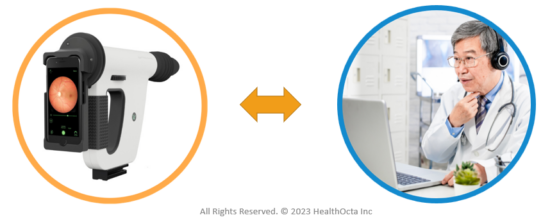
CarePlus by HealthOcta is one such innovation that utilizes undilated eye exams with best of breed, FDA approved non-mydriatic cameras, offering a host of benefits that make them a preferred choice for early detection of retinal disorders. A few of the key benefits are listed below
Patient Comfort
Undoubtedly, one of the most significant advantages of undilated eye exams is the enhanced comfort they provide to patients. Traditional dilated eye exams require the use of eye drops to dilate the pupils, resulting in temporary blurred vision, sensitivity to light, and difficulty focusing. These side effects can last for several hours, making it inconvenient for patients to resume their daily activities immediately after the examination. In contrast, undilated eye exams using non-mydriatic cameras do not necessitate pupil dilation, ensuring that patients experience no discomfort and can carry on with their life routines without interruption.
Convenience and Accessibility
Retinal screenings are vital for patients with diabetes and other chronic conditions, as they are at a higher risk of developing retinal complications. Undilated eye exams with non-mydriatic cameras are highly convenient and can be performed in primary care settings, eliminating the need for patients to visit specialized eye clinics or undergo extensive preparation. The increased accessibility through the CarePlus program encourages more individuals to undergo regular screenings, ultimately leading to earlier detection and intervention.
Faster results
Traditional dilated exams may take longer due to the time required for pupil dilation and subsequent examination. In contrast, undilated retinal screenings are swift and produce results almost immediately. This speed not only reduces patient anxiety but also facilitates timely diagnosis, increased coverage in general practice settings and enables timely eintervention, which can be critical in preventing vision loss.
Most importanly, the use of non-mydriatic cameras allows for quicker and efficient imaging of the retina.
Safer for Patients
Undilated eye exams are also considered safer for patients, particularly those with certain medical conditions or allergies that may react adversely to the eye drops used in dilation. Additionally, undilated exams are suitable for patients of all ages, making them a more versatile and inclusive option for retinal screenings.
Cost-Effective
By eliminating the time, expertise and resources required for dilation, undilated retinal screenings with non-mydriatic cameras are a cost-effective alternative. The simplicity and cost-effectiveness of retinal imaging paired with HealthOcta’s technology to transmit and enhance the images for review by a qualified and licensed Ophthalmologist makes the CarePlus screening program a game-changer for healthcare systems. CarePlus enables healthcare providers to to allocate resources more efficiently and to provide screenings to a broader population.
Increased Patient Compliance
The discomfort associated with traditional dilated exams can deter some individuals from seeking regular screenings. Undilated eye exams remove this barrier and encourage greater patient compliance . When patients are more comfortable and experience minimal disruption to their daily lives, they are more likely to adhere to recommended annual screening schedules, ultimately improving their long-term eye health.
In summary, Eye exams with non-mydriatic cameras used by the CarePlus program offer a significant advancement in retinal screenings. The program and technology prioritize patient comfort, convenience, rapid results, safety, and cost-effectiveness, making our workflows a crucial asset in preventing vision loss due to retinal issues. These screenings administered as part of the CarePlus program enhance accessibility and patient compliance, representing a clear choice in our mission to fuse technology & medicine to protect the precious gift of sight.