Tag: diabetes

  • Benefits of undilated eye exams for retinal eye screenings

    In the realm of preventive healthcare, early detection is often the key to successful intervention.

    This principle holds particularly true when it comes to preserving our precious sense of sight. Retinal complications, such as those arising from diabetes and other chronic disorders, can lead to preventable blindness if left undetected and untreated.

    Fortunately, advances in technology and medical practice have paved the way for more accessible and patient-friendly retinal screenings that can be conducted as part of your annual office visit to your Primary care provider.

    CarePlus by HealthOcta is one such innovation that utilizes undilated eye exams with best of breed, FDA approved non-mydriatic cameras, offering a host of benefits that make them a preferred choice for early detection of retinal disorders. A few of the key benefits are listed below

    Patient Comfort

    Undoubtedly, one of the most significant advantages of undilated eye exams is the enhanced comfort they provide to patients. Traditional dilated eye exams require the use of eye drops to dilate the pupils, resulting in temporary blurred vision, sensitivity to light, and difficulty focusing. These side effects can last for several hours, making it inconvenient for patients to resume their daily activities immediately after the examination. In contrast, undilated eye exams using non-mydriatic cameras do not necessitate pupil dilation, ensuring that patients experience no discomfort and can carry on with their life routines without interruption.

    Convenience and Accessibility

    Retinal screenings are vital for patients with diabetes and other chronic conditions, as they are at a higher risk of developing retinal complications. Undilated eye exams with non-mydriatic cameras are highly convenient and can be performed in primary care settings, eliminating the need for patients to visit specialized eye clinics or undergo extensive preparation. The increased accessibility through the CarePlus program encourages more individuals to undergo regular screenings, ultimately leading to earlier detection and intervention.

    Faster results

    Traditional dilated exams may take longer due to the time required for pupil dilation and subsequent examination. In contrast, undilated retinal screenings are swift and produce results almost immediately. This speed not only reduces patient anxiety but also facilitates timely diagnosis, increased coverage in general practice settings and enables timely eintervention, which can be critical in preventing vision loss.

    Most importanly, the use of non-mydriatic cameras allows for quicker and efficient imaging of the retina.

    Safer for Patients

    Undilated eye exams are also considered safer for patients, particularly those with certain medical conditions or allergies that may react adversely to the eye drops used in dilation. Additionally, undilated exams are suitable for patients of all ages, making them a more versatile and inclusive option for retinal screenings.

    Cost-Effective

    By eliminating the time, expertise and resources required for dilation, undilated retinal screenings with non-mydriatic cameras are a cost-effective alternative. The simplicity and cost-effectiveness of retinal imaging paired with HealthOcta’s technology to transmit and enhance the images for review by a qualified and licensed Ophthalmologist makes the CarePlus screening program a game-changer for healthcare systems. CarePlus enables healthcare providers to to allocate resources more efficiently and to provide screenings to a broader population.

    Increased Patient Compliance

    The discomfort associated with traditional dilated exams can deter some individuals from seeking regular screenings. Undilated eye exams remove this barrier and encourage greater patient compliance . When patients are more comfortable and experience minimal disruption to their daily lives, they are more likely to adhere to recommended annual screening schedules, ultimately improving their long-term eye health.

    In summary, Eye exams with non-mydriatic cameras used by the CarePlus program offer a significant advancement in retinal screenings. The program and technology prioritize patient comfort, convenience, rapid results, safety, and cost-effectiveness, making our workflows a crucial asset in preventing vision loss due to retinal issues. These screenings administered as part of the CarePlus program enhance accessibility and patient compliance, representing a clear choice in our mission to fuse technology & medicine to protect the precious gift of sight.
  • Remote diabetic eye screenings powered by HealthOcta

    Remote diabetic eye screenings powered by HealthOcta

    Diabetic retinopathy (DR) continues to be the leading cause of preventable blindness globally
    with a prevalence of 22.27% for any kind of DR, 6.17% for vision-threatening DR (VTDR), and 4.07% for diabetic macular edema (DME) among patients with diabetes. 

    We’ve been receiving a lot of inquiries from our healthcare provider partners to enable diabetic eye screenings for their patients using the Ophthalmology service line within our VideoConsults platform.

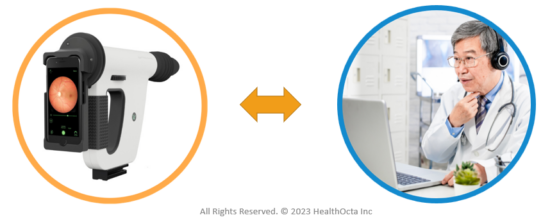
    Turns out that the HealthOcta technology platfrom and team are a great fit to help address this existing need and to put a curb on preventable blindness. Digital retinal imaging devices powered by HealthOcta’s technology platform and our panel of Ophthalmologists can enable primary care practices enable a higher standard of eye screenings for their diabetic patient population.

    Better care is about awareness and education

    Offering diabetic eye screenings as part of primary care services can improve patient engagement and satisfaction. Patients appreciate the convenience of receiving comprehensive care in one location, and they are more likely to follow through with recommended screenings when they are easily accessible.

    Regular eye screenings can serve as a reminder for patients to manage their diabetes effectively. When patients see the potential impact of diabetes on their eyes, they may be more motivated to control their blood sugar levels, adhere to medications, and adopt a healthier lifestyle.

    Eye diseases can exist even if you have no symptoms

    Annual eye exams are important for preventing and detecting diabetes-related eye complications. They can help identify problems that can prevent or delay vision loss if treated. Annual eye exams can help providers identify more diseases earlier in patients who might otherwise go untreated. Annual screening can help detect conditions before they exhibit symptoms.

    Diabetics are at a high risk of vision loss

    Diabetics are also at higher risk for cataracts and macular degeneration. Early detection and treatment of these conditions can preserve vision.

    Diabetic retinopathy (DR) occurs when the blood vessels inside the eye start to leak blood and fluid into the retina, causing damage and permanent vision loss. Early detection and treatment is crucial for preserving your eyesight.

    Diabetic macular edema (DME) is a complication of diabetic retinopathy, and occurs when the macula, the center of the retina, begins to swell. The macula is responsible for your central and color vision. When the macula swells, it damages the blood vessels, causing them to leak— resulting in vision loss.

    While patients with uncontrolled blood sugar levels have a higher risk of diabetic retinopathy, those with controlled diabetes are still at risk and need to be screened against that risk regularly.

    It is recommended that patients receive annual eye exams for early detection of the disease, and increased optimal treatment results. By regularly monitoring a diabetic patients eye health, you are ensuring that any changes that occur will be detected early, before they can cause any harm.

    Empowering Better Healthcare through Tech+Med

    Despite the benefits stated above, most patients with diabetes do not receive annual eye screening per recommended guidelines. By deploying nonmydriatic cameras like the ones supported by HealthOcta in primary care or laboratory settings, remote retinal imaging technologies can broaden eye-care access and reduce the long-term costs of quality care.

    If you are a primary care practitioner or a opthalmologist or feel passionate about this topic, we would love to hear from you.

    Some eye-opening statistics…

  • Video Consults for Endocrinology

    Its clear to all that we’re living a national shortage of healthcare providers – some have gone on to call it an Public Health crisis.

    The Association of American Medical Colleges (AAMC) estimates (March 2023) that the United States will face a shortage of up to 124,000 physicians by 2034. This shortage is expected to span both primary- and specialty-care fields. The shortage is projected to increase by 37,800 to 124,000 physicians within 12 years

    The shortage is driven by increasing demand for physician services, particularly population growth and aging. The workforce shortage has been increasing since before the COVID-19 pandemic and accelerated at an even more alarming rate thereafter.

    California, Florida, and Texas are the three states expected to have the greatest estimated physician shortage by 2030.

    More than 46 million Americans, or 15 percent of the U.S. population, live in rural areas

    Today, Rural areas make up nearly two-thirds of primary care health professional shortage areas (HPSAs) in the country. Rural residents are more likely to die from heart disease, cancer, unintentional injury, chronic lower respiratory disease, and stroke. About 20 percent of Americans live in rural areas, but barely one-tenth of physicians practice there.

    We created Video Consults to help address this coverage gap by fusing together technology with medical experts spanning a wide geography. We’ve created an Ophthalmology practice and are now on our way to focus on Endocrinology needs of the nation.

    Why Endocrinology?

    The number of endocrinologists who treat adults is not growing nearly fast enough to keep up with the surging demand driven by a growing and aging population compounded by the continuing obesity epidemic. There has been a shortage of practitioners in the field of Endocrinology for many years. The continuing obesity pandemic, growth in diabetes and other endocrine disorders has only made the situation worse.

    “The wait time for a new patient to be seen is much greater than in almost any other specialty in medicine by a factor of two.
    You can get in to see a cardiologist in 15 days, but it’ll take you 37 days to get in to see an endocrinologist,”

    Robert A. Vigersky, MD (cited from Endocrine news, Dec 2014)

    How does Video Consults help?

    • Our platform enables healthcare institutions to improve access and reach to specialty services
    • Enables the provider to request a specialty service on-demand. Greater reach to specialists.
    • Practitioner (specialist) gets ubiquitous reach without the need to travel away from their medical practice. Better quality of life for the practitioner.
    • Access to expert consultation is received quicker, faster and more economically.
    • Patients receive a higher level of care.

    Our Endocrinology service line is yet another way in which Video Consults continues to deliver on HealthOcta’s mission of fusing expertise in technology and medicine to help healthcare providers deliver a higher level of care to their patients.

    Get in touch. Join us & learn more.

    We’re growing our Endocrinology practice are keen to engage with physicians across the country. Sign up to be part of our network of healthcare providers and we’ll get in touch to bring you on board. You may also request our team to get in touch

    References